

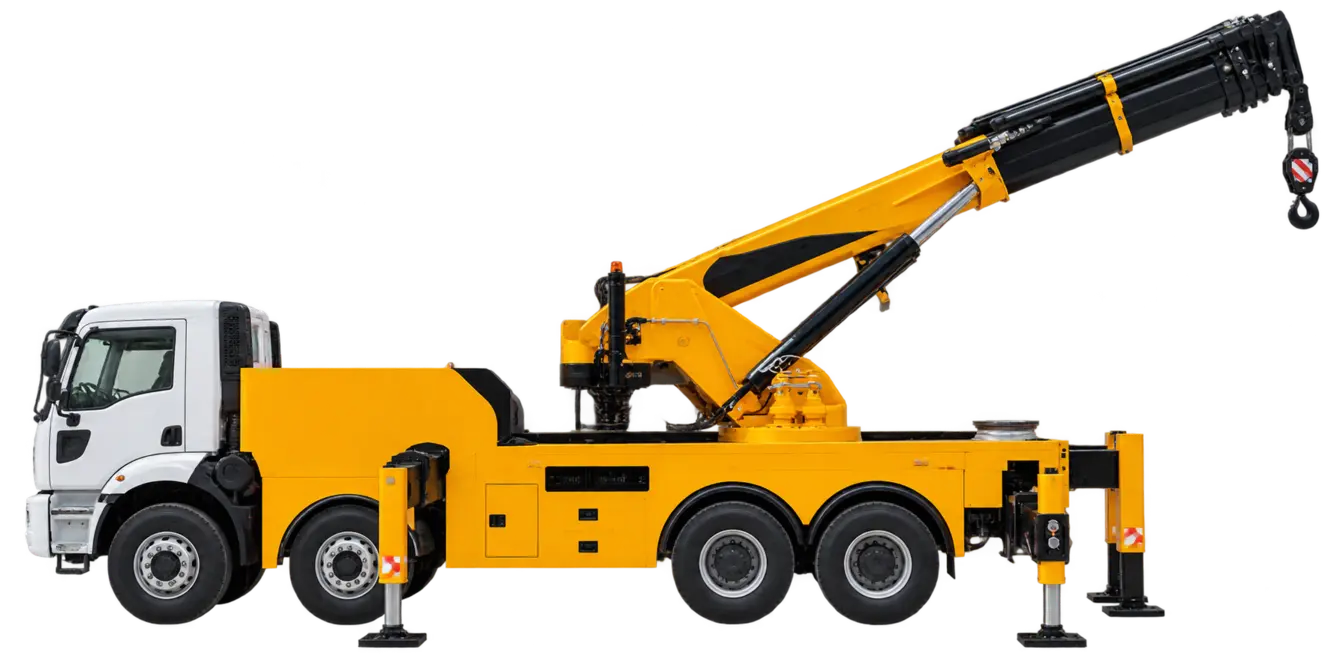
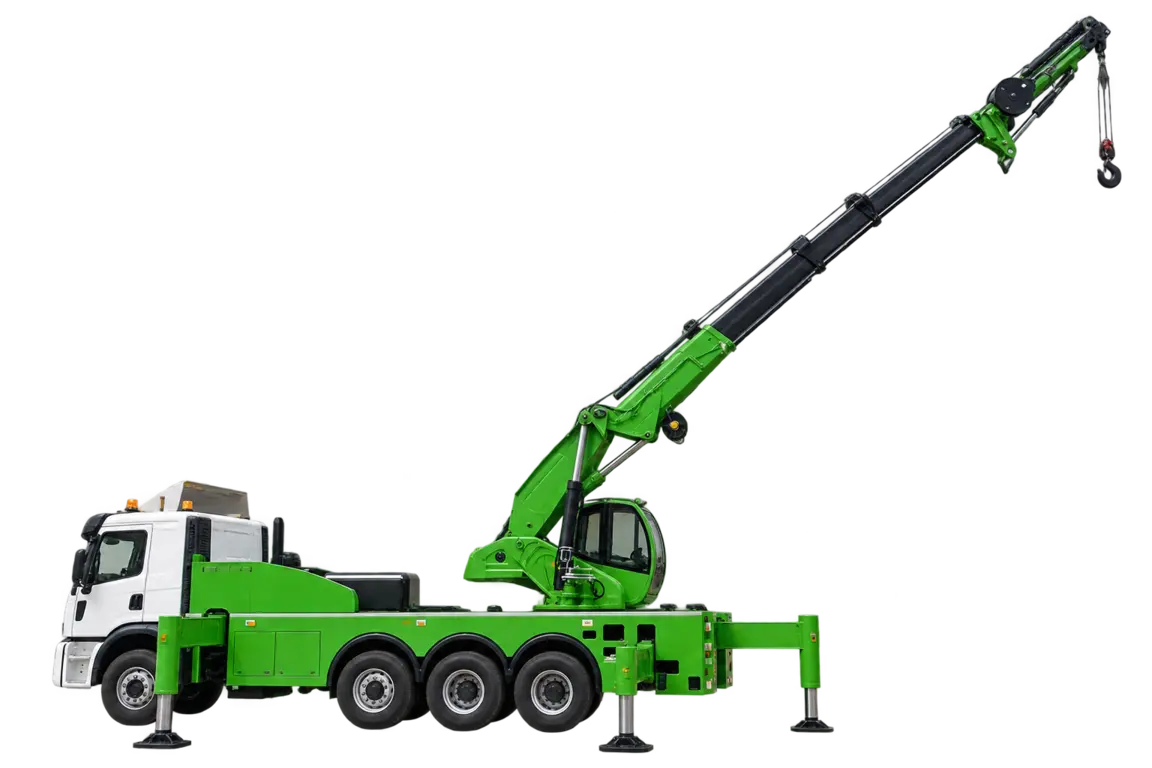
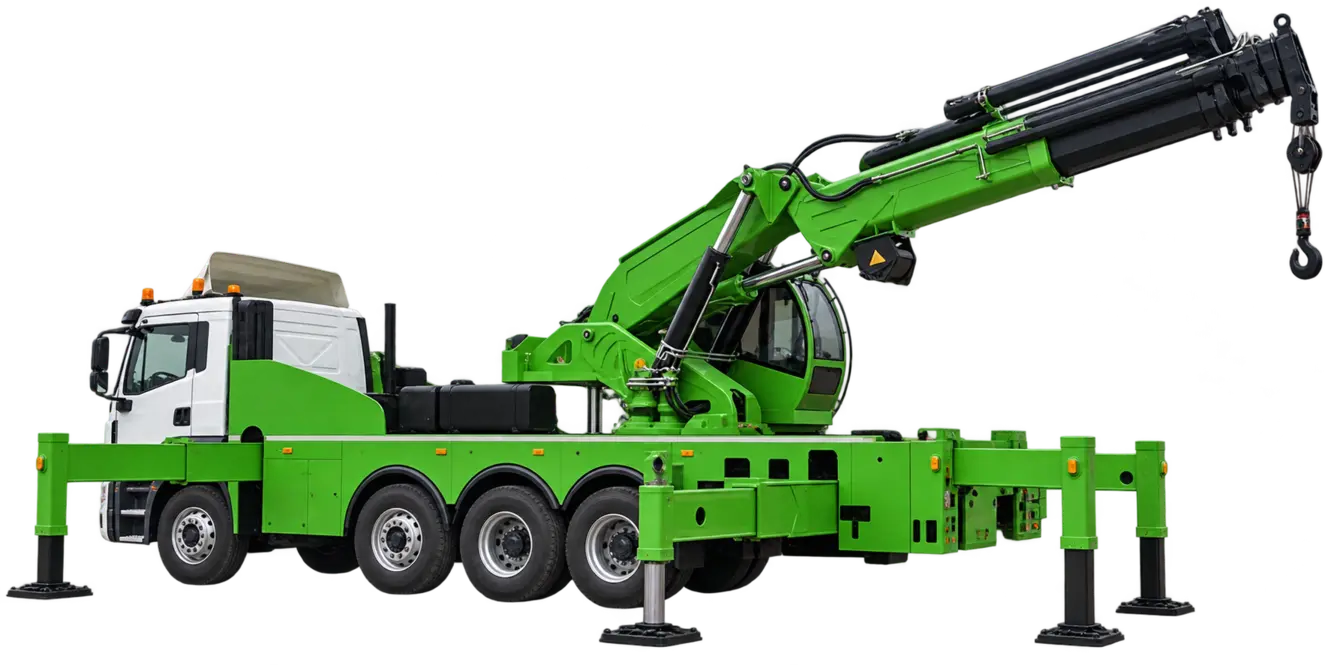
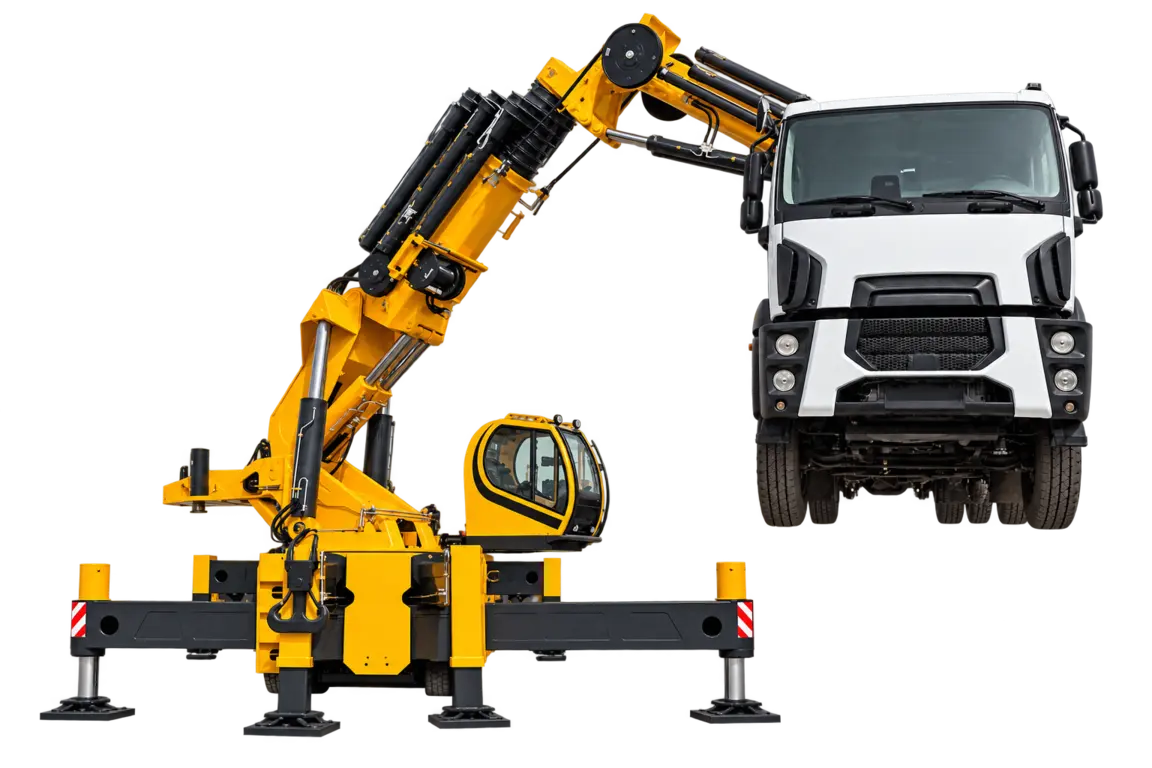
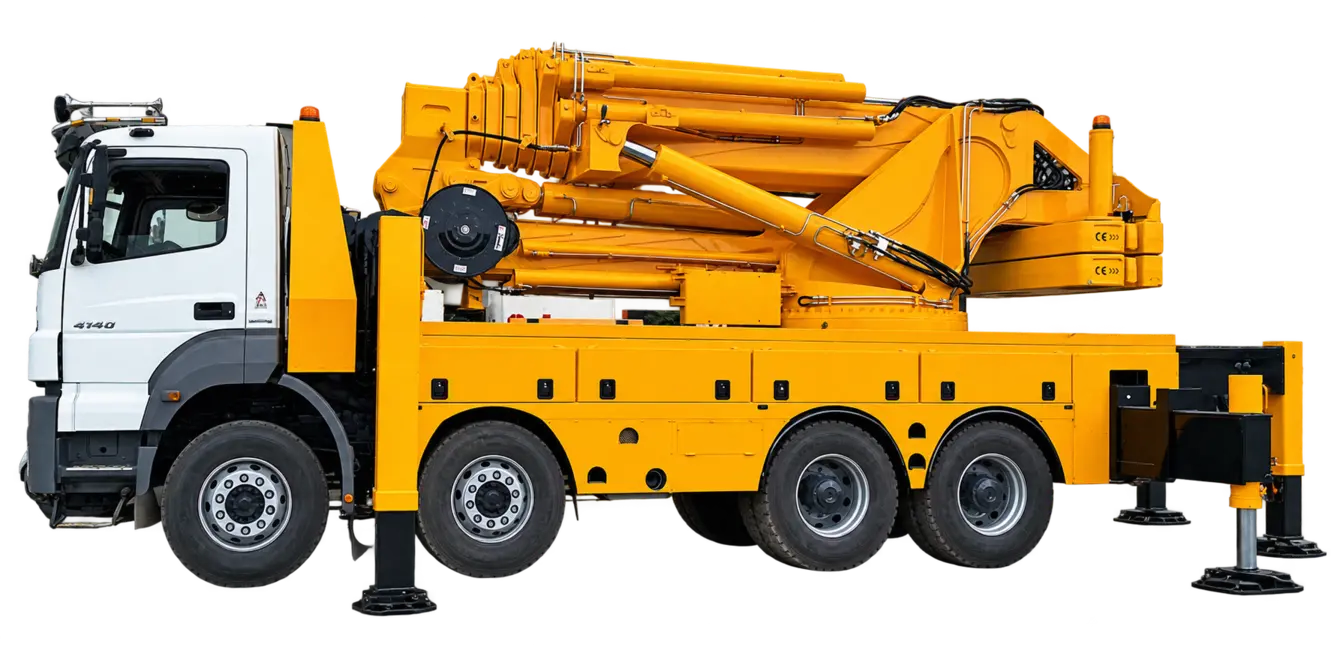

A boat crane, also known as a marine crane, is a hydraulic crane used to lift loads at sea, on everything from fishing boats and workboats to yachts, ports and piers. It works on the same principles as a land-based crane, but salt water, humidity and a constantly moving platform call for different priorities in design and selection. In this article, we explain what a marine crane is, where it's used and what to look for when choosing one.
What is a marine crane?
A marine crane is a hydraulically powered lifting unit, usually mounted permanently on a vessel's deck. Most designs are based on knuckle boom or telescopic booms, but the materials, surface protection and hydraulic components are chosen for marine conditions. The crane typically draws its power from the vessel's main engine or from a separate hydraulic power unit.
Marine applications
- Fishing boats: Hauling in and unloading nets, crates and fishing gear
- Workboats and service vessels: Transferring materials, equipment and spare parts
- Fish farms: Cage maintenance and handling feed and equipment
- Yachts and leisure boats: Launching tenders and water sports equipment
- Ports and piers: Moving loads between vessel and shore
- Research and marine services: Deploying and recovering survey and maintenance equipment
How a marine crane differs from a land crane
A marine crane and a truck-mounted crane may look similar at first glance, but their working conditions lead to important design differences:
- A moving platform: Waves keep the vessel in constant motion, which makes loads swing and puts dynamic forces on the crane. That's why lifting capacity is generally assessed more conservatively at sea.
- No outriggers: Land cranes rely on outriggers for stability; on a marine crane, the vessel itself takes on that role.
- Constant moisture and salt: The crane is exposed to salty air and water even when it isn't working.
- Limited space: Deck space is tight, so compact folding and the right mounting position matter even more.
What to look for when choosing a marine crane
Corrosion protection
The marine environment is one of the most aggressive for steel. Corrosion protection standards such as ISO 12944 place marine and coastal environments in their highest corrosivity categories. That's why a marine crane should offer:
- A multi-layer marine-grade paint system applied over a blast-cleaned surface
- Stainless steel or galvanized pins, bolts and fasteners
- Corrosion-resistant coatings on cylinder rods
- A body design with proper drainage that keeps water from pooling
Hydraulic and electrical components
Valve blocks, control levers and electrical connections need protection from salt spray and moisture. Enclosed or shielded valve banks, waterproof connectors and marine-rated hoses and fittings greatly reduce the risk of failure.
Capacity, reach and vessel stability
Choosing a crane for a boat isn't only about lifting capacity. When a load is lifted, the vessel's heel changes. The crane's weight, lifting moment and mounting position should therefore be determined with the vessel's stability characteristics in mind. Where needed, it's a good idea to evaluate this together with a naval architect or the relevant classification society.
Installation
A marine crane must be mounted on a deck area reinforced to safely carry the forces it transmits. Installation planning covers:
- Deck structure and required reinforcement
- The crane's working area and slewing range
- The hydraulic power source and hose routing
- Securing the boom safely while under way (boom rest)
Marine crane maintenance
At sea, maintenance needs to be more frequent and more thorough than for land-based cranes:
- Rinse the crane with fresh water after each use, especially to prevent salt buildup.
- Lubricate grease points regularly with water-resistant grease.
- Repair paint damage and early signs of rust promptly.
- Watch for signs of water in the hydraulic oil, such as cloudiness.
- If the crane will sit idle for a long time, protect cylinder rods and bare metal surfaces with protective products.
As with land cranes, statutory periodic inspections by authorized persons under the applicable regulations should never be overlooked.
Frequently asked questions
Can a land-based crane be mounted on a boat?
It's technically possible but not recommended. Standard cranes aren't protected against the corrosive marine environment, so rust and hydraulic problems can appear quickly.
What powers a marine crane?
Usually a hydraulic pump driven by the vessel's main engine or a separate hydraulic power unit. The right solution depends on the vessel's equipment and how intensively the crane will be used.
How often should a marine crane be serviced?
A daily fresh-water rinse and visual check are recommended. For full service intervals, follow the manufacturer's manual; with heavy use, these intervals may be shorter.
To find the right crane for your vessel or marine project, explore our marine crane models, take a look at our custom project and installation services for applications that need fitting, or request a quote.


