

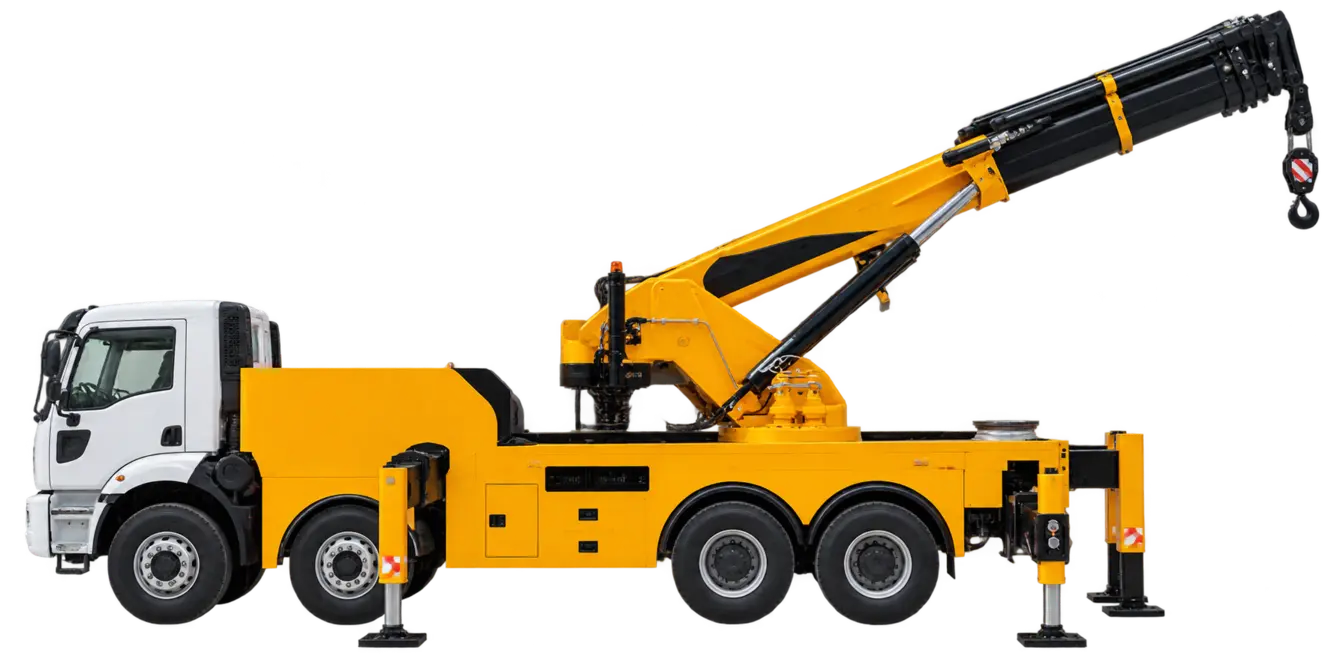
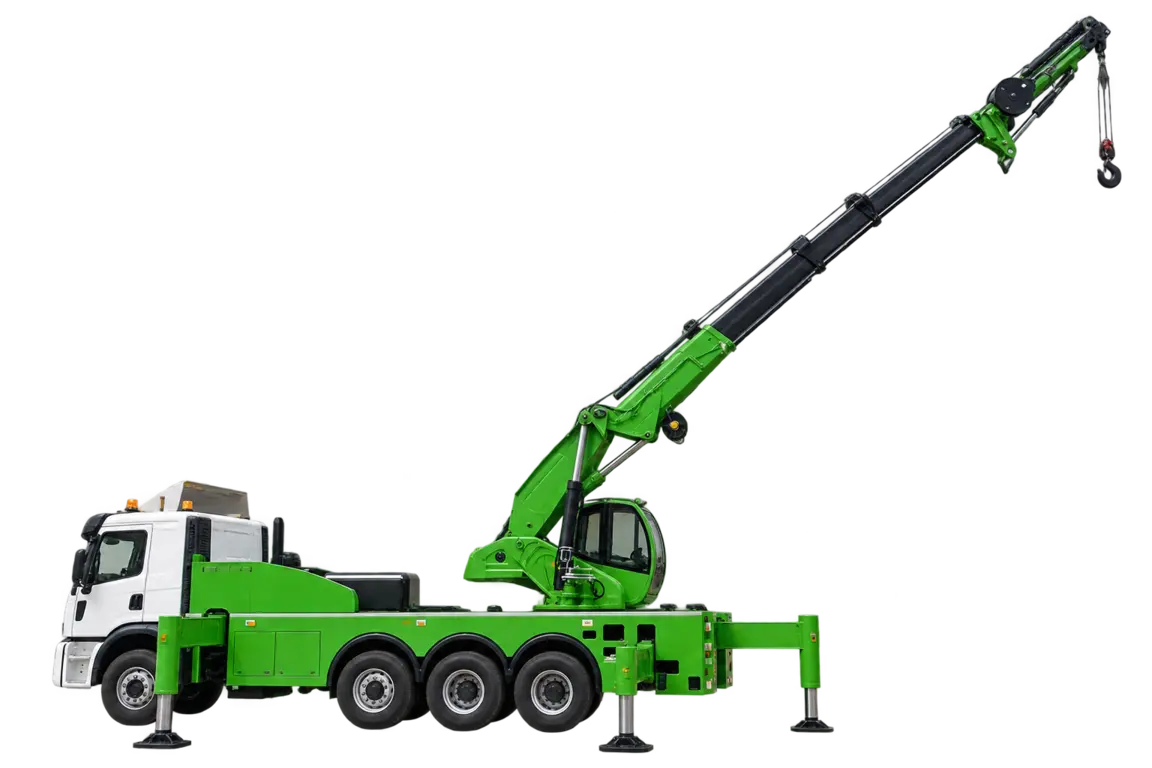
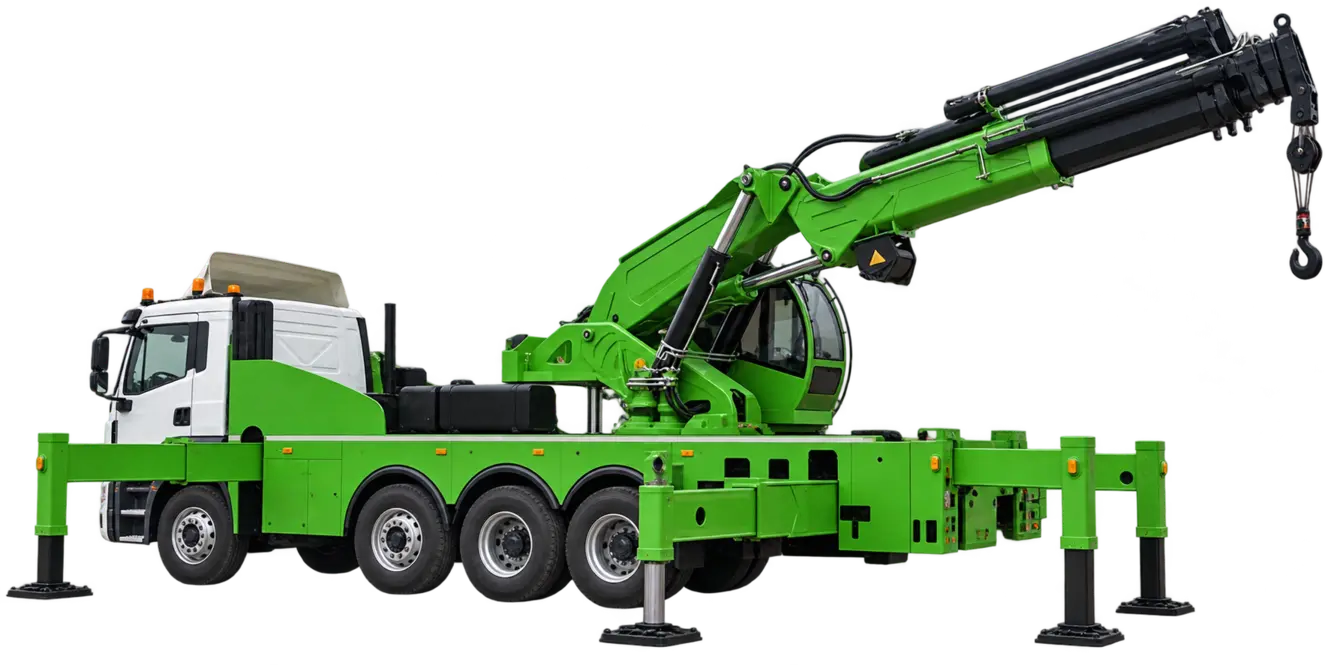
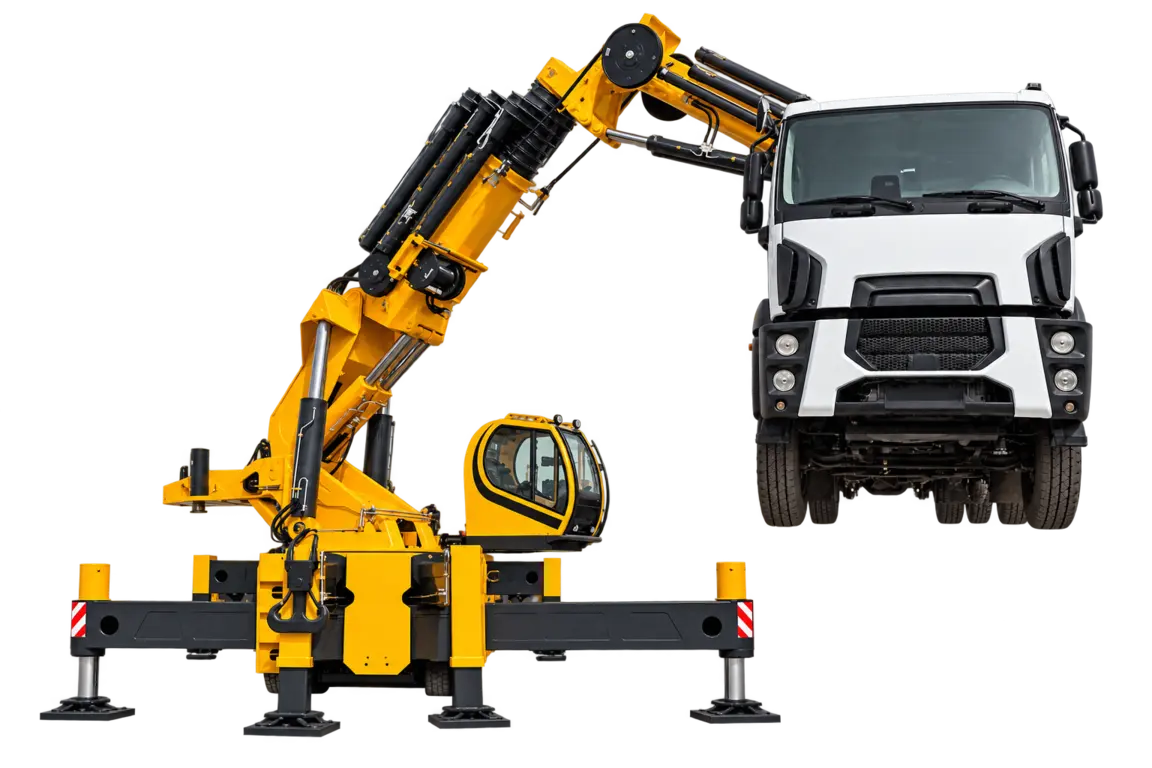
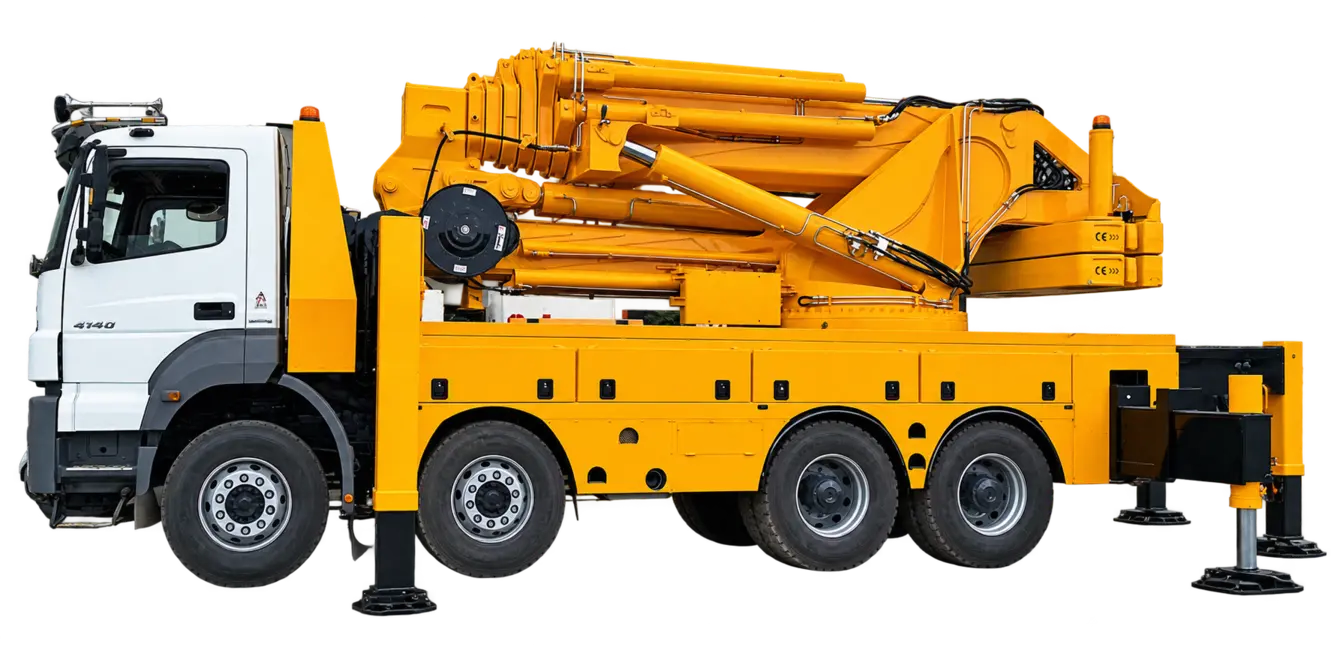

Hydraulic cranes work under heavy loads, often in dust, moisture and changing weather. Without regular maintenance, a small leak or a worn pin can quickly turn into a costly breakdown or a serious safety hazard. In this article, we've put together a practical checklist that groups hydraulic crane maintenance into daily, weekly and monthly checks.
The list below is a general framework. Always follow the intervals and values in your crane's operation and maintenance manual first.
Daily checks (before starting work)
A quick visual inspection by the operator at the start of each shift catches most problems early:
- Check the hydraulic oil level and top up with the same type of oil if needed.
- Look for oil leaks on cylinders, fittings and hoses.
- Make sure the outriggers extend and retract smoothly and the pads are in good condition.
- Test the emergency stop buttons and the overload protection system.
- Confirm that the hook safety latch works.
- Check that the load chart and warning labels are legible.
Weekly checks
- Grease lubrication points such as boom joints, pins and the slewing ring with the grease specified in the manual.
- Check pin retainers (circlips, lock pins, bolts) and replace any that are missing or loose right away.
- Inspect hoses for chafing, cracks, bulges or kinks.
- Make sure the control levers and radio remote respond correctly.
- Visually check the bolts that secure the crane to the chassis.
Monthly and periodic checks
Hydraulic oil and filters
Hydraulic oil is the lifeblood of the system. Contaminated or worn-out oil leads to premature wear of pumps and valves. Keep an eye on the oil's color and clarity: a cloudy appearance can mean water contamination, while darkening or thickening can point to overheating. Replace return and pressure filters according to the clogging indicator if there is one, or otherwise according to the operating hours in the manual. Change the oil at the intervals the manufacturer recommends, using oil of the recommended viscosity.
Hoses and fittings
Hydraulic hoses age even when they show no external damage. Hoses with a worn cover and exposed wire braid, weeping at the fittings or bulging should be replaced without delay. Never check a pressurized hose for leaks with your bare hand; a fine jet of oil can penetrate the skin and cause serious injury.
Pins, bushings and boom play
As the pins and bushings in the boom joints wear, play develops in the crane. This makes precise load placement harder and puts extra stress on the connection points. On telescopic sections, also check the slide pads for wear.
Wire rope, hook and lifting accessories
If your crane has a winch, inspect the wire rope for broken wires, crushing, birdcaging and corrosion. A hook with cracks, an opened throat or any deformation must be taken out of service. Slings, chains and shackles also need to be tagged, in good condition and rated for the load.
Seasonal checks
Weather directly affects how a hydraulic system behaves. A few extra checks at the change of seasons help prevent breakdowns in the middle of a busy period.
- Before winter: Make sure your hydraulic oil is suitable for low temperatures. In cold weather, let the system warm up at idle for a while before starting work, and don't push the crane under load in the first few minutes.
- Before summer: If there is an oil cooler, clean its fins; overheating shortens oil life and damages seals.
- After a long idle period: Check the cylinder rods for rust or scoring, and test every function without a load first.
Statutory periodic inspection
In Türkiye, the Regulation on Health and Safety Requirements for the Use of Work Equipment requires lifting and handling equipment to be inspected periodically by authorized persons. These inspections are generally carried out at least once a year and documented in a report. Because the interval and scope may vary with the applicable regulations and the equipment's operating conditions, it's important to stay up to date with current rules. However thorough your in-house maintenance is, it does not replace this statutory inspection.
Keep maintenance records
Record every service, every part replaced and every fault found, along with the date. A well-kept maintenance log makes recurring problems easier to spot, speeds up periodic inspections and helps protect the crane's resale value.
Frequently asked questions
How often should the hydraulic oil be changed?
The interval depends on the crane model, operating hours and working conditions. The manufacturer's maintenance manual is the most reliable source; heavy use and dusty environments may call for more frequent changes.
Can I keep using the crane if I notice an oil leak?
Operating with a leak of unknown origin is not recommended. If it comes from a hose or a cylinder seal, a sudden loss of pressure could occur; the safest course is to stop the crane and have it inspected.
Who issues the periodic inspection report?
Under the applicable regulations, these inspections are carried out and reported by authorized persons or organizations that meet the qualifications defined in the regulation.
If you'd like planned maintenance support to keep your crane safe and running longer, take a look at our hydraulic crane maintenance and repair service, browse all of our services or get in touch with us.


