

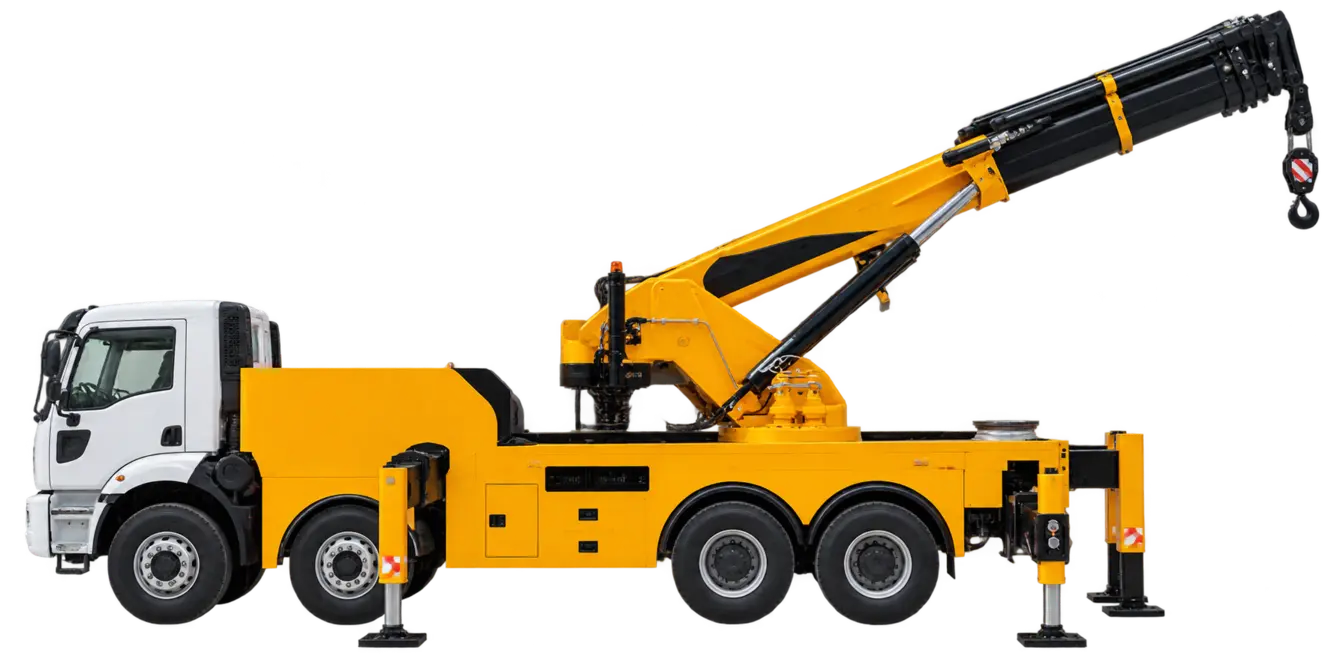
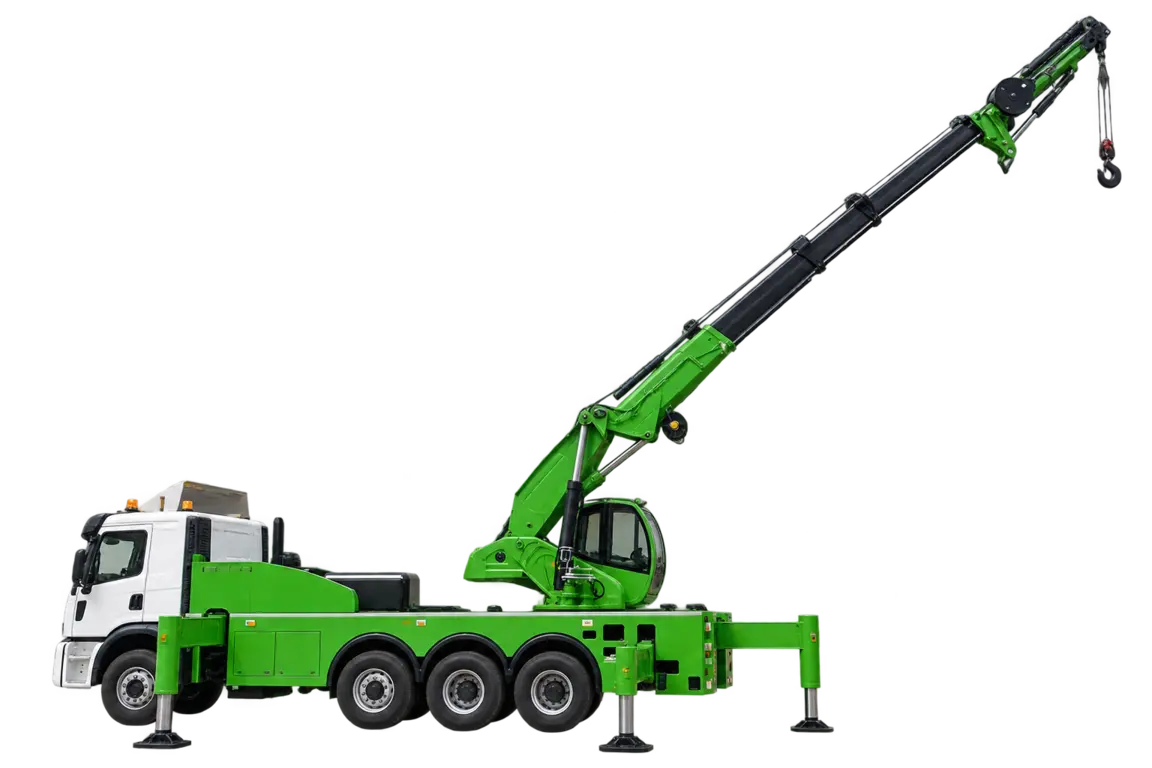
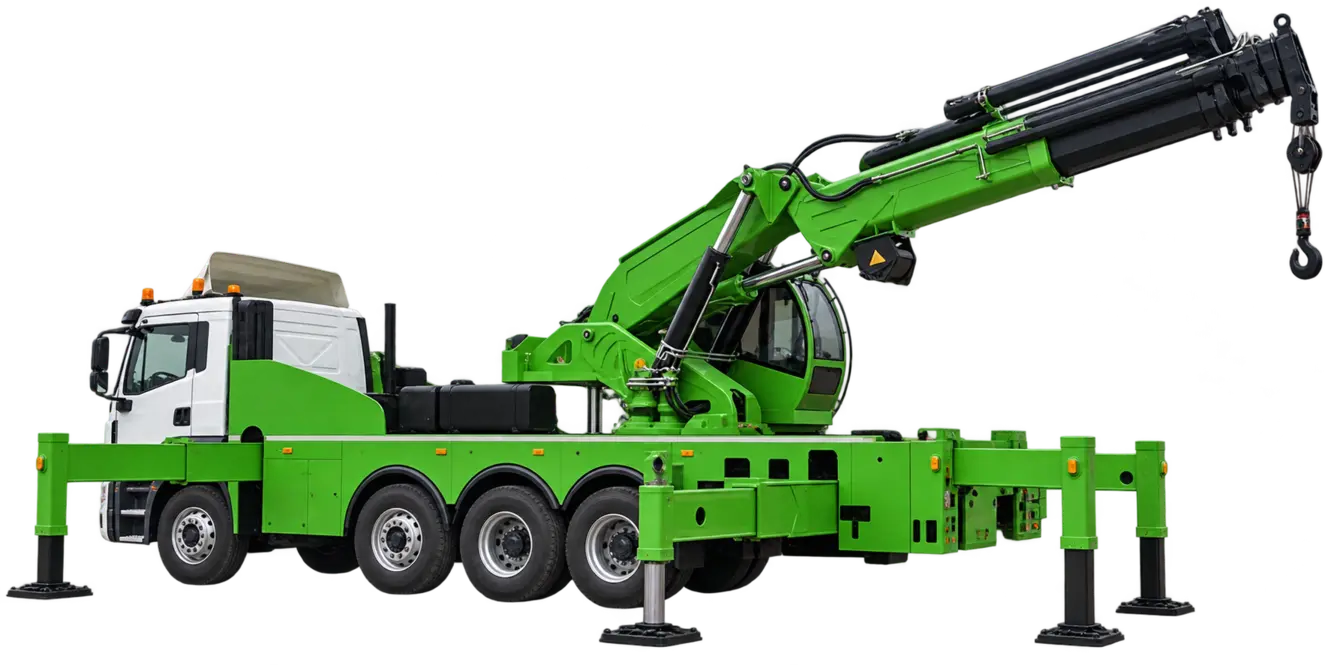
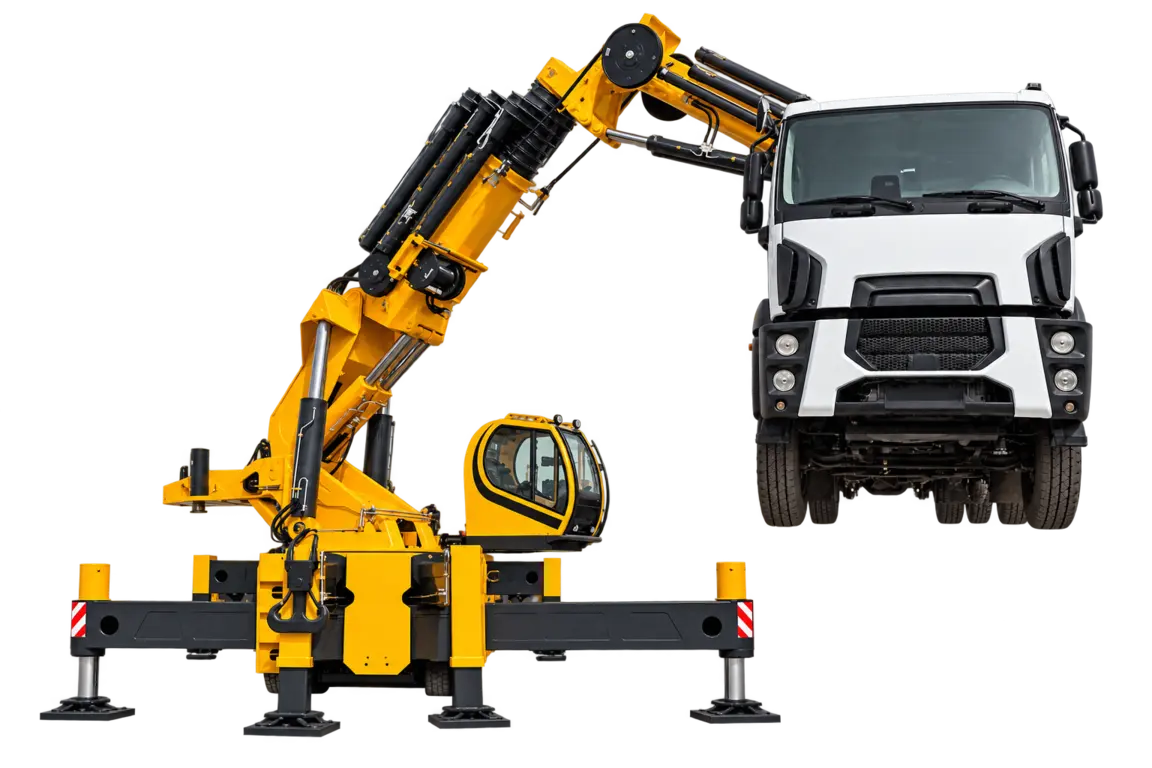
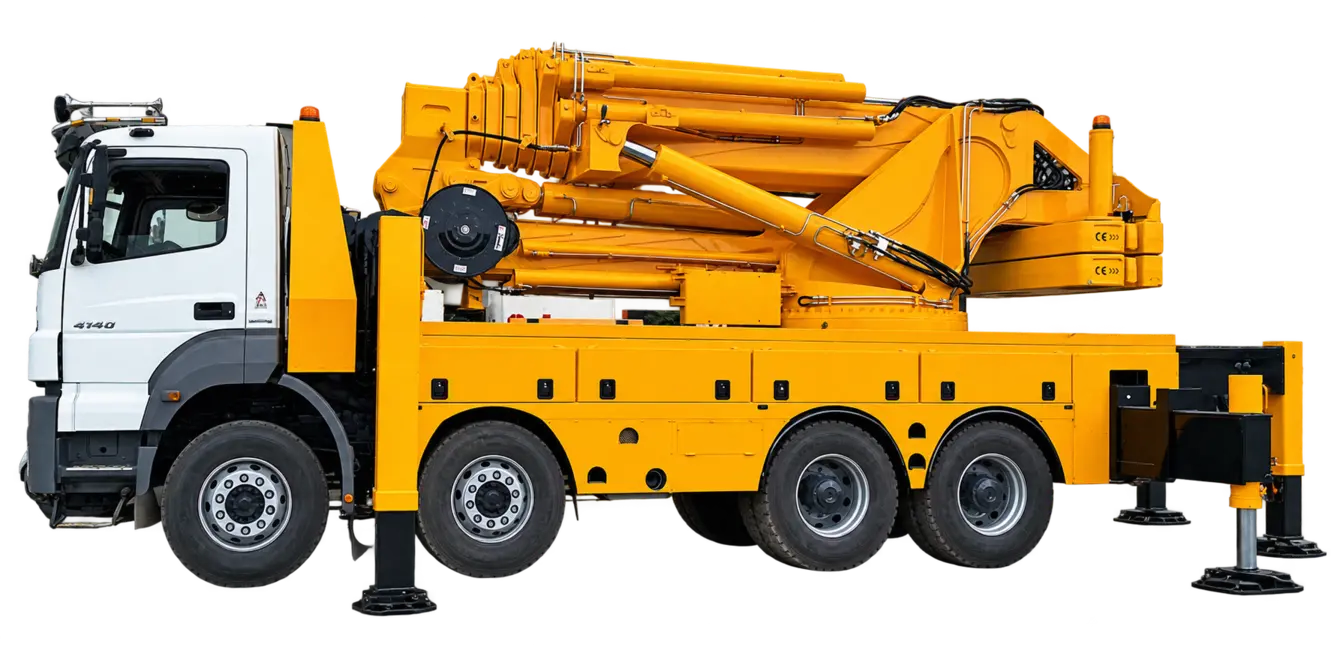

One of the most common questions from people planning to buy or rent a truck-mounted crane is this: knuckle boom or telescopic? Both are hydraulically operated and both can be mounted on a truck chassis, but the boom design, the way they behave on site and the jobs they handle best are quite different. In this article, we compare the two crane types to help you decide which one fits which job.
What is a knuckle boom crane?
A knuckle boom crane is made up of articulated sections, much like a human arm. The "knuckle" between the inner and outer boom lets the crane fold into a compact package behind the cab or at the rear of the bed when it's not in use. The outer boom usually carries hydraulic extensions, and some models can also take a jib.
Key features:
- Takes up little space when folded, leaving more room for cargo on the bed.
- Its articulated design can move loads over and under obstacles.
- Well suited to precise load placement.
- Offers flexible use with radio remote control and attachments such as buckets, pallet forks and grabs.
What is a telescopic crane?
On a telescopic crane, the boom consists of nested sections that extend hydraulically along a straight line. When not in use, the boom rests along the length of the truck. It typically works with a hook and a winch with wire rope.
Key features:
- Practical for jobs that need long, straight reach.
- Well suited to lifting loads vertically to high points.
- Relatively simple design and operation.
- Working with a wire rope allows flexible hook height.
Comparison table
| Feature | Knuckle boom crane | Telescopic crane |
|---|---|---|
| Boom design | Articulated, folding | Nested straight sections |
| Transport position | Compact, behind the cab or at the rear | Lying along the truck |
| Working over obstacles | Very well suited | Limited |
| Precise placement | A key strength | Needs more care due to load swing on the rope |
| Long, straight reach | Possible with extensions | A key strength |
| Attachments | Wide range | Mostly hook work |
These are general assessments; actual performance should always be checked against the load chart of the specific model.
Differences in day-to-day operation
The difference between the two types isn't just the shape of the boom; they also feel different in everyday use.
- Setup: Once a knuckle boom crane unfolds, the load is ready to be handled right at the boom tip. With a telescopic crane, the hook and wire rope setup is part of the job.
- Load control: Because a knuckle boom crane carries the load close to the boom tip, swing is relatively easier to control. Working on a wire rope takes more attention from the operator to manage swing.
- Operator skill: An articulated crane often uses several functions at once, so an operator who knows the crane well gets more out of it.
- Maintenance: An articulated design has more pins and grease points. On a telescopic boom, the slide pads and, if fitted, the winch rope need regular checks.
Which one for which job?
Jobs where a knuckle boom crane may be the better choice
- Urban delivery of building materials (bricks, blocks, pallets)
- Placing loads behind walls, onto roofs or into tight courtyards
- Installing precast elements, containers and machinery
- Work that calls for attachments such as buckets or grabs
- Applications that need maximum cargo space on the bed
Jobs where a telescopic crane may be the better choice
- Maintenance and installation work that requires vertical lifts to high points
- Installing poles, billboards and lighting fixtures
- Sites where long, unobstructed reach is enough
- Lifts where working with a wire rope is an advantage
Questions to ask before you decide
- How heavy is the load I lift most often, and how far from the truck does it need to go?
- Are there obstacles on site, such as walls or roofs, that I need to work over?
- How much cargo do I need to carry on the bed?
- Will I need to use attachments?
- Will the crane do the same type of work all year, or a mix of jobs?
Some models combine both approaches: telescopic extensions on the outer boom of a knuckle boom crane pair the flexibility of an articulated design with longer reach. So the choice doesn't always have to be one or the other.
Frequently asked questions
Which one lifts more?
That depends more on the model's capacity class and working radius than on the crane type. The right way to compare is to read the lifting values at the same distance from each load chart.
Does a knuckle boom crane put more load on the truck?
With either type, the crane's weight uses part of the truck's payload. The compact layout of a knuckle boom crane can leave more room on the bed, but weight and axle load calculations should be done separately for each vehicle.
If I'm not sure, can I try renting first?
Yes. Crane rental is a practical way to see different types at work on your own jobs, and it makes the decision easier.
We can help you find the crane type that fits your work best. Browse our products, check out our hydraulic crane rental service for short-term needs or request a quote.


