

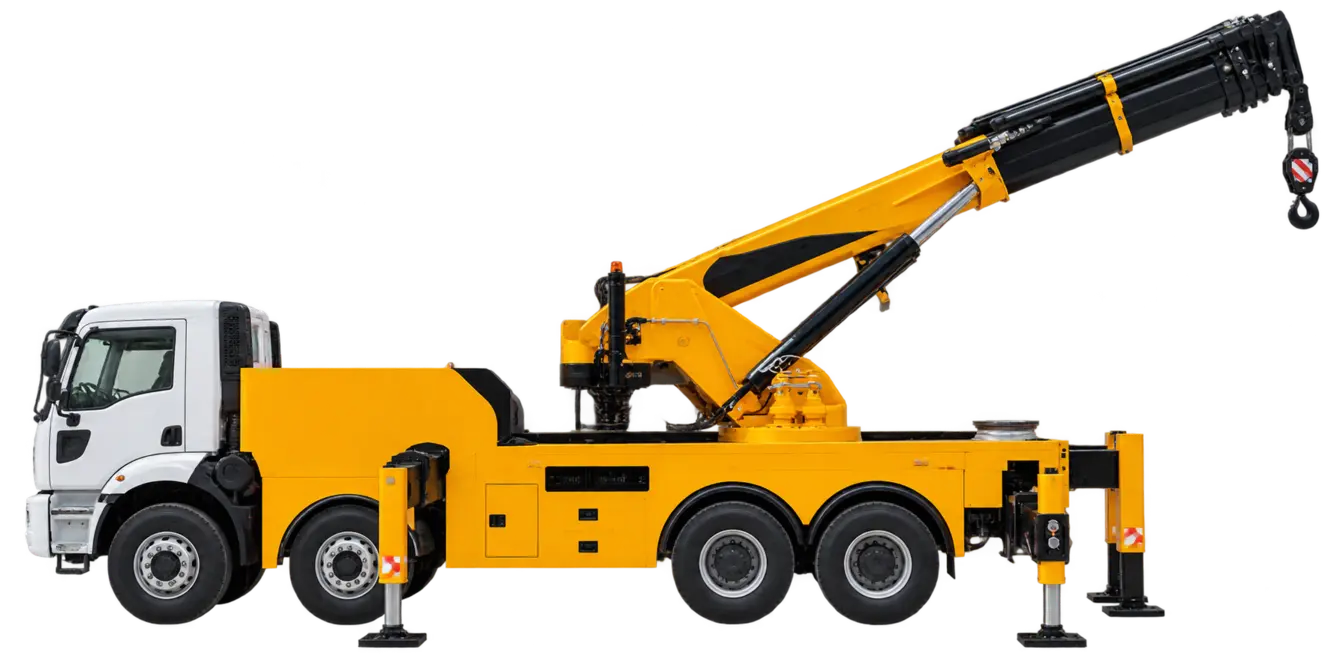
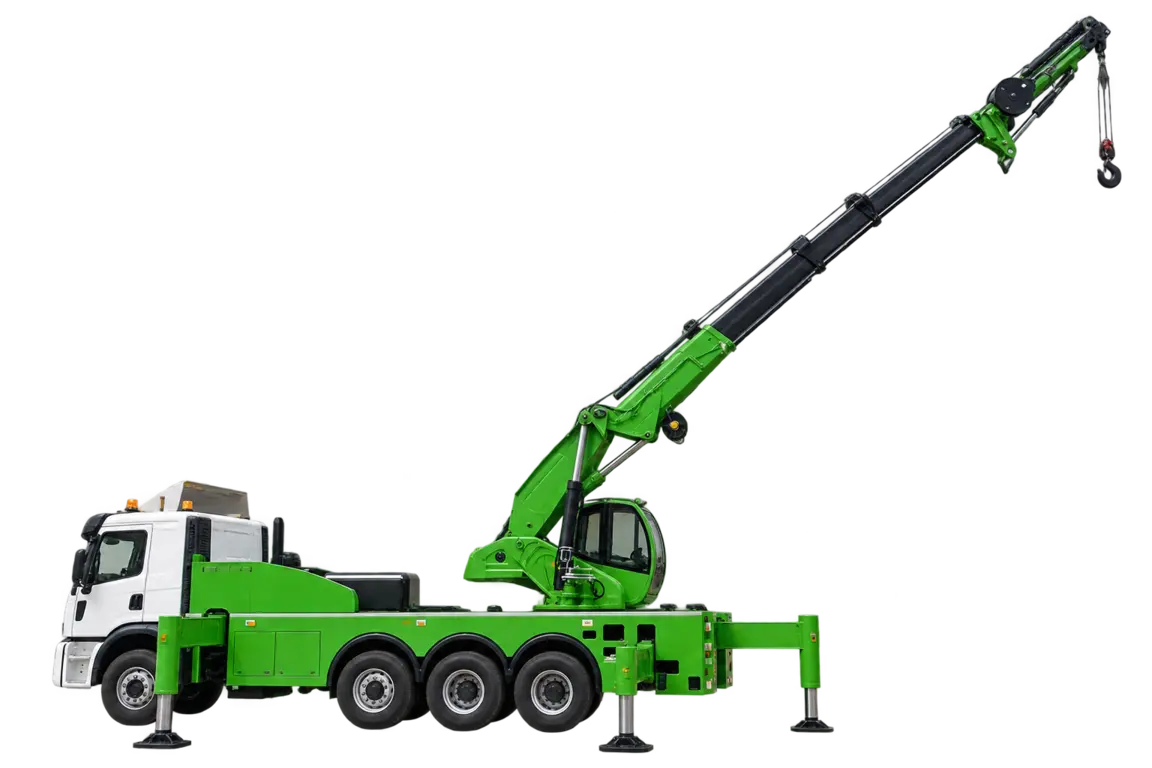
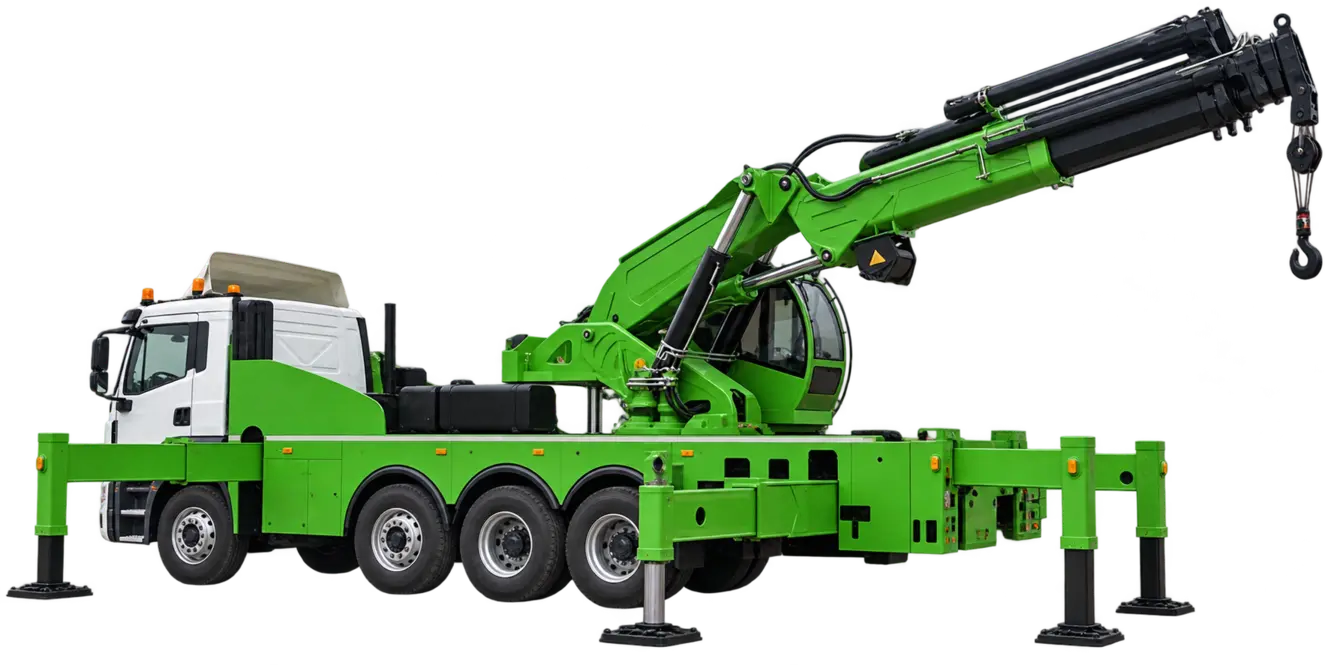
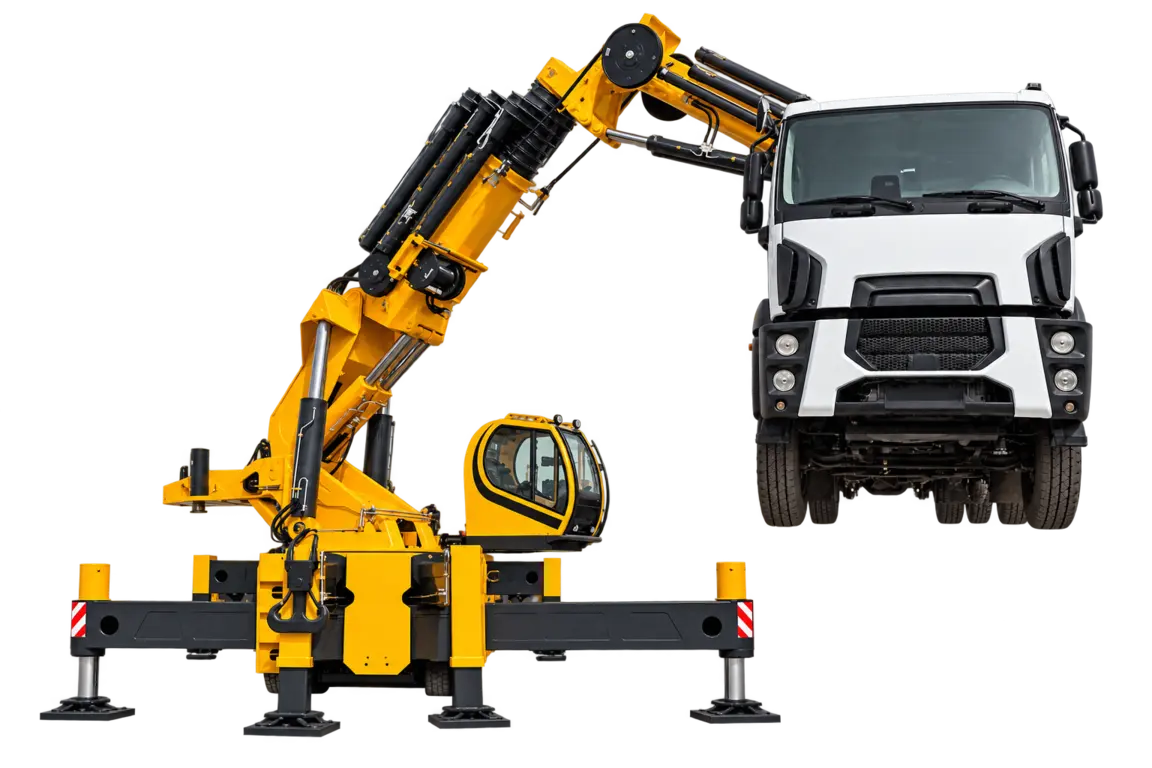
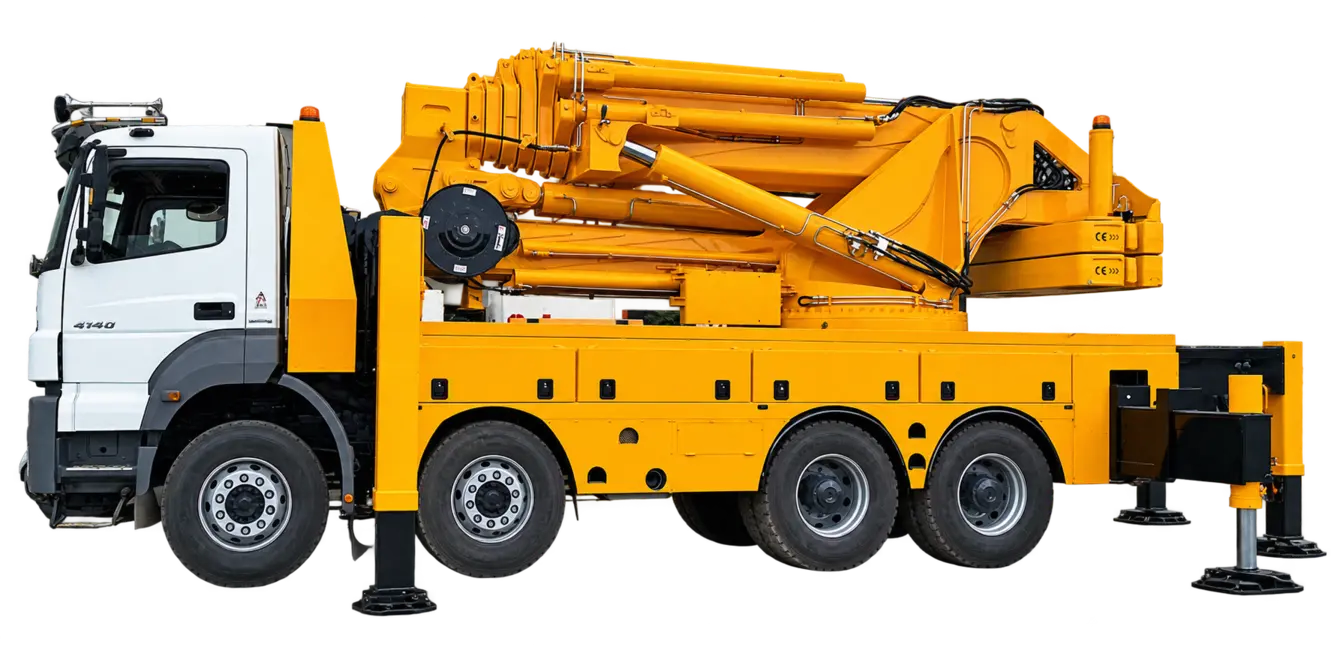

A truck-mounted hydraulic crane is fitted to a truck chassis so you can transport and lift loads with the same vehicle. Chosen well, it will work reliably for years. Chosen poorly, it either falls short on capacity or adds unnecessary weight to the truck and drives up operating costs. This guide walks you through the key criteria to weigh when choosing a truck-mounted crane.
1. Lifting capacity and working radius
The most common mistake is looking only at maximum lifting capacity. The headline figure in a brochure usually applies with the boom at its shortest position, closest to the crane. As the boom extends, the load you can lift drops significantly.
That is why loader crane capacity is usually expressed in tonne-meters (tm), and the real decision should be based on the manufacturer's load chart. Before you choose, answer these questions:
- What is the weight of the load you lift most often?
- How far from the truck do you need to place it?
- Have you accounted for the weight of the hook block, slings and lifting accessories?
Leaving a margin slightly above your everyday needs is safer, and more economical in the long run, than constantly running a crane at its limit.
2. Reach: height and horizontal outreach
Lifting materials onto a roof, placing a load behind a wall or working on a tight job site all call for different kinds of reach. Boom length, the number of hydraulic extensions and the availability of a jib determine where the crane can go.
If you need to move loads over obstacles or into enclosed spaces, a knuckle boom model may be the better fit; if you need long, straight reach, a telescopic model may come out ahead. Don't look only at maximum outreach: check how much the crane can actually lift at that distance.
3. Truck chassis and axle loads
The crane uses part of the truck's payload with its own weight, so the crane and the truck should always be evaluated together:
- Chassis strength: The chassis must safely handle the overturning moment the crane creates; a subframe is often used for this purpose.
- Axle loads: The crane and load distribution should be planned so that legal axle load limits are not exceeded.
- Remaining payload: Calculate in advance how much cargo you can still carry on the bed once the crane is installed.
- Mounting position: Mounting behind the cab or at the rear of the bed changes both weight distribution and the working area.
We recommend making these calculations together with the installation team, taking the vehicle's registration and modification requirements into account.
4. Outriggers (stabilizers)
Safe, stable operation depends largely on the outriggers. Their spread, whether they are hydraulic or manual, and how the outrigger pads transfer pressure to the ground all matter.
If you work in narrow streets or crowded sites, be sure to ask how the crane behaves when the outriggers cannot be fully extended and how the load chart changes as a result. Heavy-duty models may also require additional outriggers.
5. Control system and operator comfort
The type of control directly affects both productivity and safety:
- Manual lever controls: Simple and durable; the operator works standing next to the crane.
- Radio remote control: Lets the operator work from the spot with the best view of the load, reducing visibility-related risks.
- High seat or cab: Offers better visibility and comfort for long or precision operations.
6. Safety equipment
In Europe, loader cranes are generally designed to the EN 12999 standard, and modern cranes are expected to carry a range of safety features. When comparing models, check for:
- An overload protection system (moment limiter)
- Easy-to-reach emergency stop buttons
- Load-holding (check) valves on the cylinders to guard against hose failure
- Outrigger position monitoring and stability warnings
- A legible load chart and warning labels
- CE marking and the relevant declarations of conformity
7. Service, spare parts and technical support
The true cost of a crane is not just its purchase price. How quickly you can get spare parts after a breakdown, who will carry out periodic maintenance and whether you have a team to call for technical support all directly affect how long the machine stays productive on site. For details on maintenance and service, see our hydraulic crane maintenance and repair page.
Define your use case before you choose
Before comparing specs, writing down what kind of work the crane will do over a full year is the fastest way to the right model. A short needs list might include:
- Typical loads and their weight range
- The kinds of sites you'll work on (city streets, construction sites, industrial plants, ports)
- Average daily operating time
- Attachment needs (pallet forks, buckets, grabs, etc.)
- How much cargo the truck will carry at the same time
This list speeds up your conversation with the manufacturer and reduces the risk of choosing a crane that's too big or too small for your needs.
Frequently asked questions
How should I determine the crane capacity I need?
Base it on the weight of the load you lift most often and the farthest distance at which you need to place it. Use the manufacturer's load chart, not the maximum capacity figure, to make your decision.
Can a crane be mounted on my existing truck?
In most cases, yes, but the chassis strength, axle loads and the truck's specifications need to be checked first. Suitability depends on the crane model and the vehicle's configuration.
When does renting make more sense than buying?
If your lifting needs are project-based or irregular, renting can be more economical. For continuous, regular use, owning your own crane is usually the better option.
To find the right crane for your needs, simply share your load, distance and vehicle details with us. You can browse our crane models or fill out our quote request form for an assessment tailored to your project.


